

A thoughtful staging plan can help buyers see how your Tacoma home looks and functions without requiring a full remodel. Start with the living room, kitchen, primary bedroom, and bathrooms, then match your preparation budget to the condition and competition your home will face. The right presentation and a well-supported asking price work together—not as substitutes for one another.
Start with a plan, not a shopping list
Preparing a home for sale can feel like a hundred small decisions at once. Before buying pillows or booking painters, walk through your property as a buyer might: from the front entrance to the main living spaces, then through bedrooms, bathrooms, and outdoor areas. Notice where clutter interrupts the view, where a repair draws attention, and where the purpose of a room is hard to understand.
Make three lists: repairs to address, cleaning and maintenance tasks, and optional presentation updates. A leaky faucet belongs in a different category from a new set of dining chairs. Ask your broker which improvements are likely to matter for your property and price range before committing to an expensive project.
It also helps to set a working budget and a target listing date. Allow time for contractor availability, deep cleaning, photography, and any touch-ups that become apparent once furniture is rearranged. If you plan to remain in the home during showings, choose a staging approach that can be maintained without turning everyday life upside down.
Give the living room a clear purpose
The main living area often appears early in listing photos and sets the tone for a showing. Start by removing extra furniture, visible cords, and small objects that compete for attention. Arrange the pieces that remain to make circulation easy and show how the room can be used, whether that means conversation around a fireplace or seating oriented toward a view.
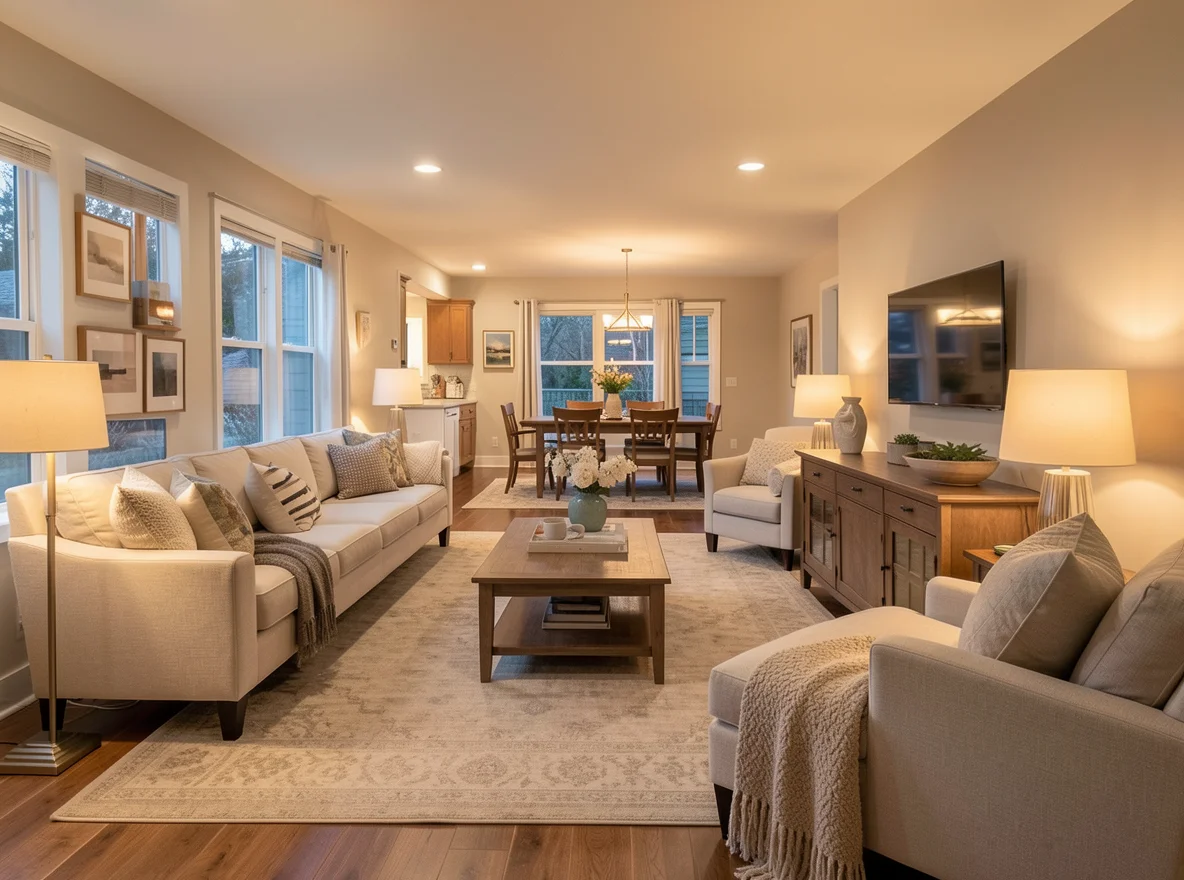
Open window coverings, clean the glass, and replace burned-out bulbs with consistent lighting. In Tacoma’s often overcast conditions, layered light can help a room feel inviting without relying on sunshine alone. Keep lamps, overhead fixtures, and natural light balanced; a photographer can advise on the best setup for your specific rooms.
Look closely at what the camera will see. A rug that fits the seating area, a tidy mantel, and a few well-placed accents can make a room feel finished without hiding its features. If the room is small, resist filling every corner. Clear sightlines give buyers a better sense of the available space and its layout.
Stage for the first showing and the first photo: clear walkways, clean windows, and working lights help buyers understand a room before decorative details do.
Remove or securely store personal photographs, financial documents, prescription medications, and valuables before photography and showings. The goal is not to erase character; it is to reduce distractions and protect your privacy while allowing the home’s architectural details to stand out.
Make the kitchen feel clean and workable
Buyers tend to look closely at kitchens because they combine storage, surfaces, appliances, and daily function in one space. Clear most countertop items, leaving enough to suggest a useful workspace rather than an empty display. Wipe cabinet fronts, clean appliance surfaces, and check that drawers and doors open smoothly.
Address small maintenance issues before considering a major renovation. Loose handles, worn caulk, a dripping faucet, or a faulty light can make a kitchen feel less cared for than it is. If an appliance needs repair or replacement, discuss the decision with your broker and consider the property’s overall condition and likely buyer expectations.
A fresh coat of paint or updated hardware may be worthwhile in some homes, but neither guarantees a higher sale price. Obtain estimates, compare the work with competing listings, and weigh the expense against the time available. For some sellers, a thorough cleaning and a few targeted repairs will be the more practical choice.
Explore the home sellers guide
Bring calm and clarity to bedrooms and bathrooms
In the primary bedroom, make the bed the visual anchor and leave enough room to move around it. Simple bedding, clean surfaces, and appropriately sized furniture help show the room’s dimensions. If a large dresser blocks a closet or window, consider moving it temporarily so buyers can see both storage and natural light.
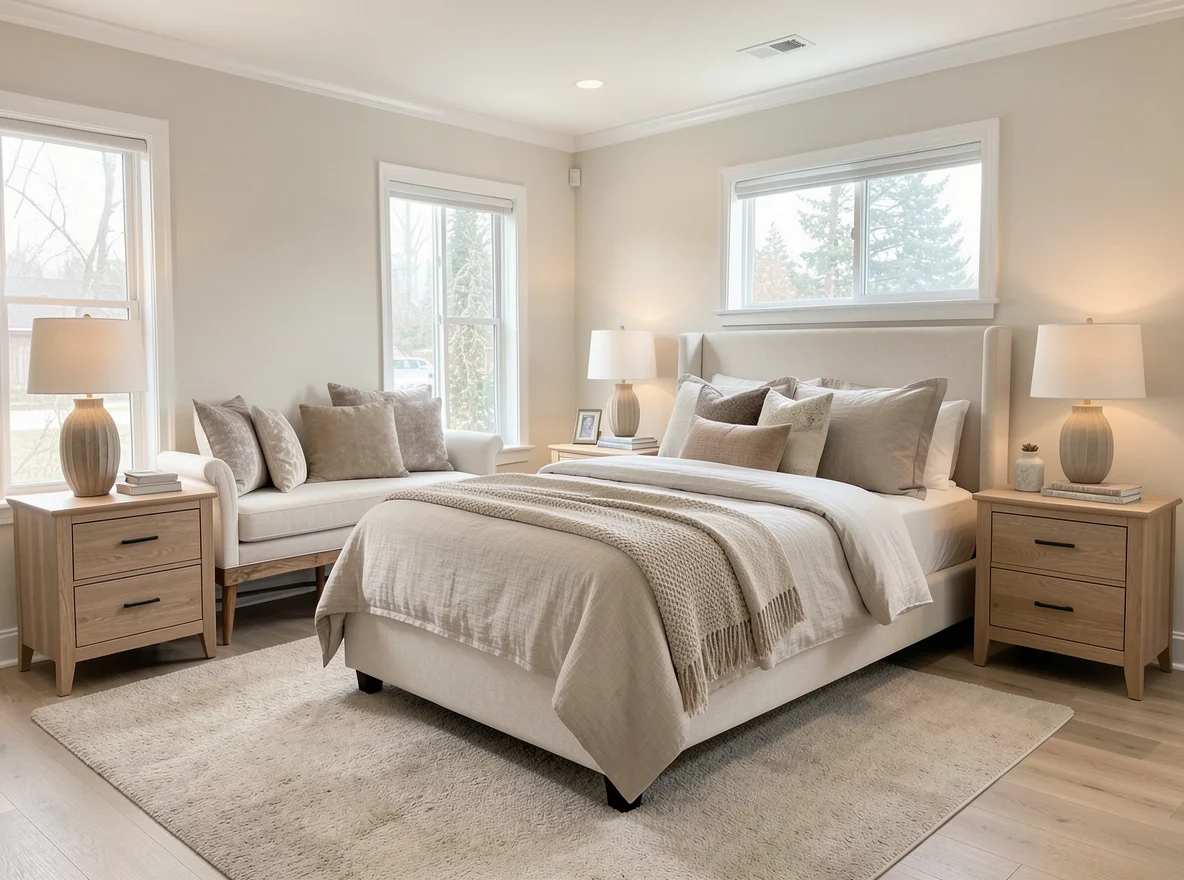
For other bedrooms or flexible spaces, choose one clear function for each room. A spare room might be shown as a bedroom, office, or reading area, depending on its layout and the rest of the home. Avoid making promises about permitted uses; if a room’s legal status is uncertain, ask your broker how it should be described in the listing.
In bathrooms, prioritize cleanliness and visible maintenance. Remove personal products from counters, clean mirrors and fixtures, replace tired towels, and make sure ventilation and lighting work properly. Pay attention to grout, caulk, and any signs of moisture. Investigate and address underlying problems rather than simply covering them with paint.
Closets matter, too. Buyers may open them to assess storage, so organize shelves and leave some breathing room where possible. You do not need to empty every closet; the aim is to show usable space and make it easy to inspect.
Do not overlook the approach
The exterior sets expectations before a buyer reaches the door. Sweep the entry, clean the front door, trim back overgrown planting, and make sure exterior lights work. In wetter Puget Sound weather, clear leaves from walkways and gutters, and keep outdoor surfaces as clean and accessible as practical.
Inside, follow the same principle: repair what is broken before adding decoration. Review visible water stains, sticking doors, damaged flooring, and other concerns with your broker and qualified professionals as appropriate. Sellers should also discuss applicable disclosure obligations rather than assuming a cosmetic update resolves a known issue.
A clean entry and dry, well-maintained walkways help the first impression hold up even when Tacoma weather is gray or rainy.
Connect presentation to a realistic price
Staging can help buyers understand a home’s strengths, but it does not determine its market value. Work with your broker to review recent comparable sales, current competing listings, and properties that did not sell. Look at location, size, condition, features, and timing—not just the highest asking price in the area.
Use that information to consider how your home will compare when it appears online. A beautifully presented home still needs an asking price supported by the market, while a home needing updates should be evaluated with those conditions in mind. Your broker can help you weigh preparation costs against pricing options and develop a plan suited to your goals.
Once the work is complete, schedule photography after cleaning and staging—not before. Keep a short showing checklist for opening blinds, turning on lights, clearing counters, and securing valuables. With the important rooms prepared, repairs addressed, and pricing grounded in current comparisons, you can bring your Tacoma home to market with a clear and practical strategy.