
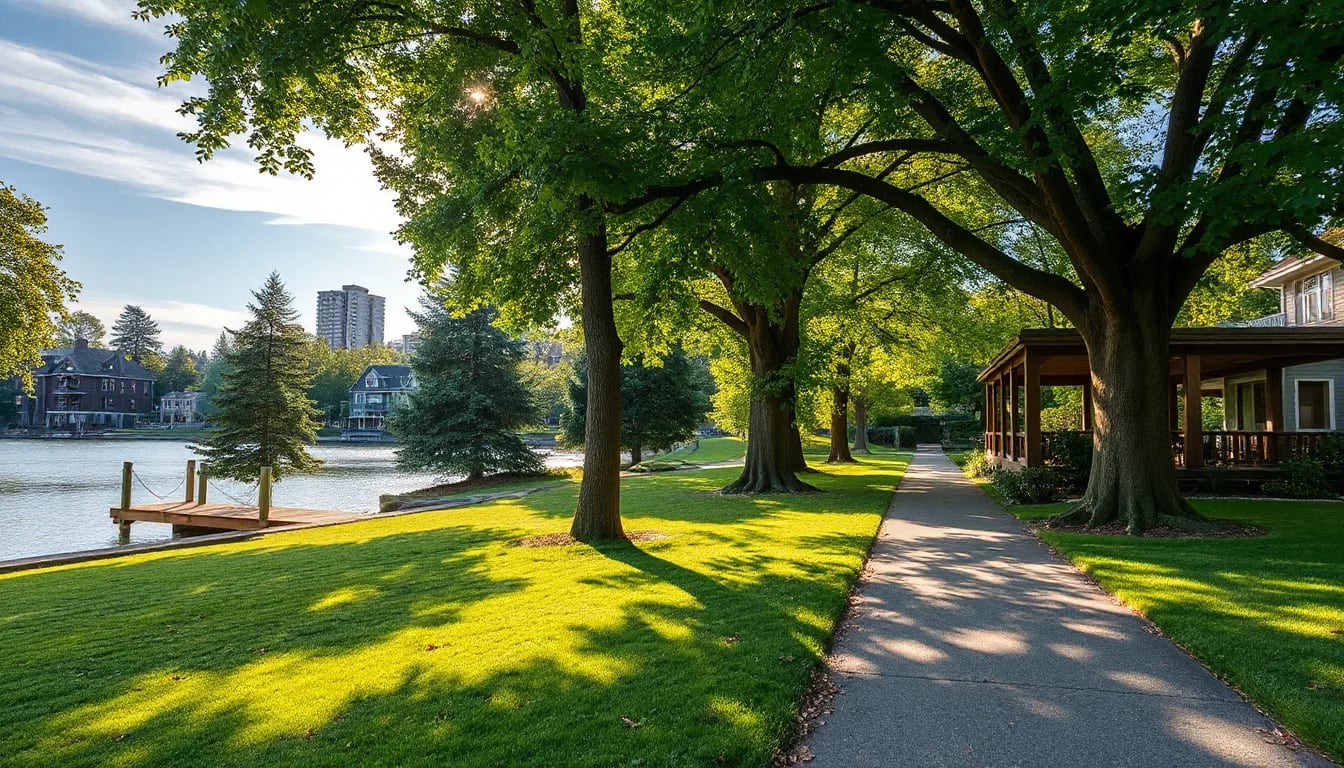
Queen Anne pairs elevated Seattle views with leafy streets, historic architecture, neighborhood parks, and easy access to city destinations. Whether you are comparing homes, planning a move, or simply exploring a classic Seattle district, this hilltop area offers a distinctive mix of scenery, local amenities, and housing styles.
A Seattle Hilltop with a Clear Sense of Place
Queen Anne rises above central Seattle in a series of distinct slopes and ridges, with Lower Queen Anne near Seattle Center and the higher residential streets extending toward the crest of the hill. The elevation is more than a geographic detail: it shapes everyday views of Elliott Bay, the Space Needle, downtown towers, Mount Rainier on clear days, and the Olympic Mountains to the west. A walk through the area can move quickly from active urban corridors to quieter blocks lined with mature trees and carefully maintained homes.
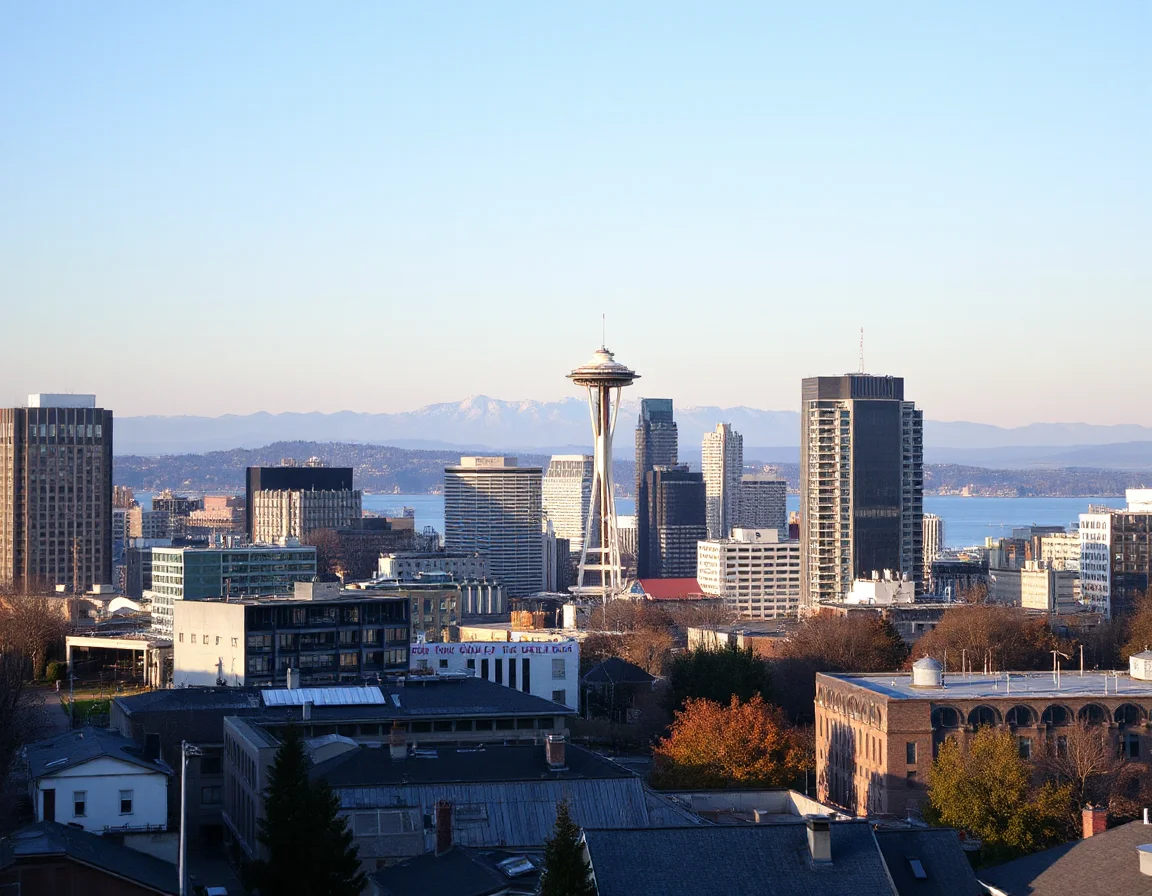
Kerry Park is the viewpoint many visitors recognize first. Its compact hillside setting delivers one of Seattle’s most photographed outlooks, placing the Space Needle in the foreground with the city and water beyond it. The park is especially compelling near sunset, though changing weather can create equally memorable scenes in softer light. Nearby Parsons Gardens provides a more secluded pocket of landscaped paths and seasonal color.
Queen Anne Boulevard adds another way to experience the neighborhood’s topography. The route follows much of the hill’s perimeter, passing viewpoints, retaining walls, gardens, and residential streets with changing architectural details. It is a practical route for taking in the area at an unhurried pace, and its many turns reveal why Queen Anne remains visually distinct from Seattle’s flatter central districts.
From the west slope to the top of the hill, small shifts in elevation can change a property’s light, outlook, privacy, and connection to nearby streets—details worth evaluating in person when comparing homes.
Beyond the parks, Queen Anne’s location creates convenient access to Seattle Center, where major cultural venues, green spaces, and seasonal events anchor the base of the hill. The waterfront, South Lake Union, downtown Seattle, and Interbay are also nearby, although travel times naturally vary with the route, time of day, and local traffic conditions. For many residents, the appeal lies in having multiple ways to move between a neighborhood setting and the broader city.
Historic Architecture and an Evolving Housing Landscape
The name Queen Anne reflects the architectural vocabulary found throughout the neighborhood, but the homes here offer far more variety than one style suggests. Original Victorian and Queen Anne–influenced residences sit alongside Craftsman homes, brick cottages, mid-century properties, townhomes, condominium buildings, and newer contemporary construction. The mix is a visible record of Seattle’s growth, with many homes shaped by the hill’s steep lots and broad views.
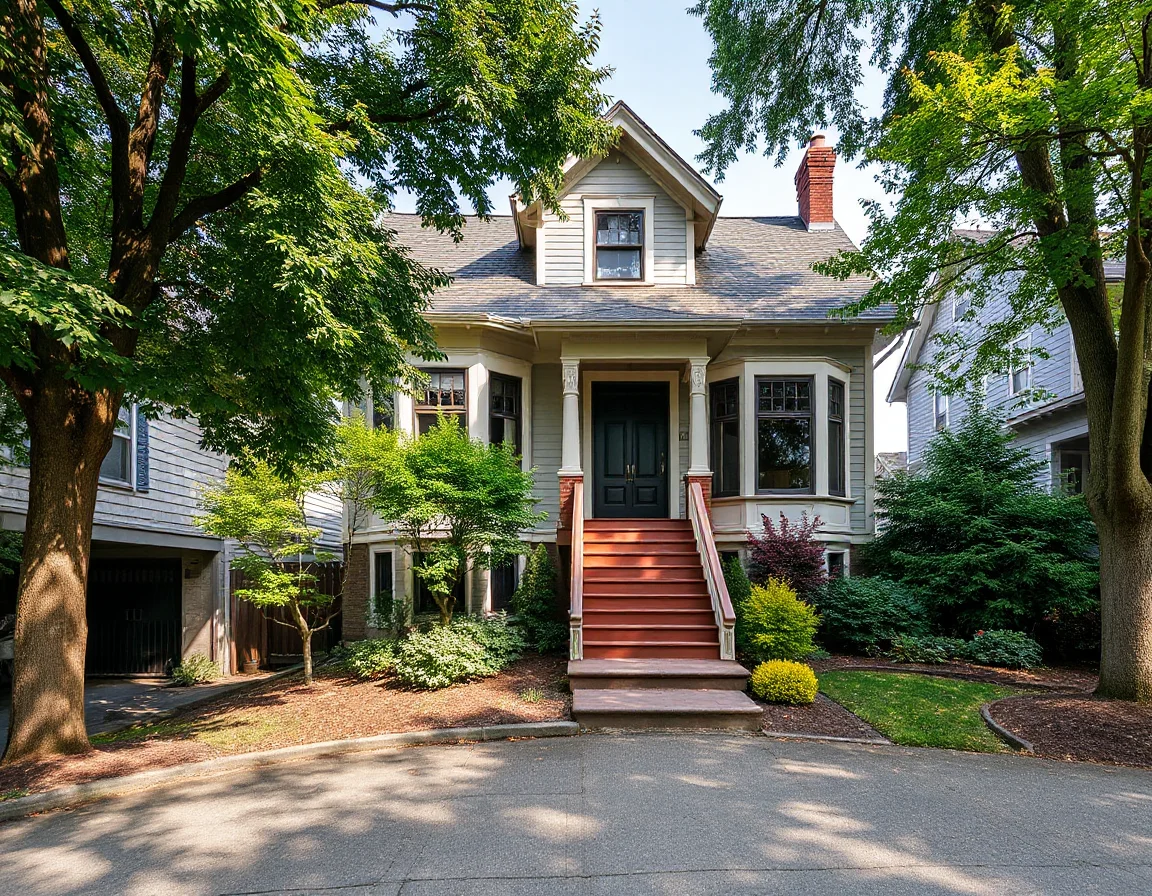
Older homes can bring memorable craftsmanship: detailed millwork, bay windows, fireplaces, built-ins, high ceilings, and porch spaces are common features to look for. At the same time, buyers should examine the practical side of an older property. Foundation condition, electrical updates, plumbing, insulation, drainage, roof age, seismic improvements, and permit history can have a meaningful effect on ownership planning. A beautiful façade is only the beginning of a thoughtful property review.
Condominiums and townhomes broaden the range of options in and around Queen Anne, especially closer to the lower hill and Seattle Center. These homes may offer different maintenance responsibilities, parking arrangements, views, shared amenities, or HOA considerations than a detached residence. Reviewing reserves, meeting minutes, rental policies, planned assessments, insurance coverage, and monthly dues helps create a clearer picture before making an offer.
Market activity in Queen Anne can vary sharply by micro-location and property type. A renovated view home on a prominent street may attract a different level of attention than a condominium several blocks away, even when the addresses are close together. Lot orientation, usable outdoor space, parking, condition, transit access, and view corridors all influence value. Current listing data and comparable sales are more useful than broad citywide averages when setting expectations.
Dining, Green Space, and Everyday Errands
Queen Anne Avenue North is one of the area’s familiar activity corridors, with places to dine, pick up groceries, browse local services, and meet up over a drink or meal. The atmosphere changes as the avenue climbs the hill: lower blocks connect more directly to Seattle Center activity, while the upper avenue has a more neighborhood-oriented rhythm. Side streets offer additional small businesses and useful everyday destinations without requiring a trip into the city core.
Outdoor space remains an important part of the Queen Anne experience. In addition to Kerry Park and Parsons Gardens, residents can access nearby routes leading toward the waterfront, Seattle Center grounds, and other Seattle parks. The hill itself provides a built-in workout for walking and cycling, while the top can feel comparatively level once you reach the crest. Stairs, slopes, and street grades are worth considering when choosing a home, particularly for daily routines, parking, deliveries, and weather conditions.
For those who enjoy Seattle’s arts and events calendar, Lower Queen Anne puts many major venues within close reach. The area around Seattle Center includes museums, performance spaces, sports and entertainment destinations, and the grounds surrounding the Space Needle. This proximity can be a benefit for enjoying events, while also making it smart to understand traffic patterns, parking needs, and seasonal activity near a prospective home.
Practical Considerations When Exploring Queen Anne
Queen Anne rewards careful on-the-ground exploration. Start by visiting at more than one time of day, since sun exposure, street activity, parking availability, and traffic can feel different in the morning, during an event, or after dark. Walk the immediate blocks around a property, check the slope from the parking area to the entry, and note whether nearby trees, buildings, or future construction could affect views or natural light.
Seattle’s wet season also makes site conditions easier to observe. Look for drainage patterns, moss on shaded surfaces, retaining-wall maintenance, gutter systems, and the condition of stairs and walkways. For homes with a view, investigate whether the outlook is protected, partially obstructed, or simply enjoyed at the moment. An experienced real estate professional can help identify records, disclosures, and questions to raise during due diligence.
Queen Anne is not a single, uniform housing market; it is a collection of streets and slopes with their own visual character and practical tradeoffs. Some buyers prioritize a skyline view, while others focus on a larger lot, proximity to parks, a renovated interior, or access to Seattle Center and employment hubs. Clarifying those priorities early makes it easier to compare homes on the features that matter most.
Why Queen Anne Continues to Stand Out
Its appeal comes from the combination of physical setting and urban connection. Queen Anne offers historic streetscapes without feeling frozen in time, city views without leaving Seattle, and nearby cultural destinations alongside smaller parks and local gathering places. The neighborhood’s hills, architecture, and outlooks create a sense of arrival that is difficult to duplicate elsewhere in the city.
For anyone considering a move or investment in the area, the best next step is to experience several parts of the hill and compare homes with a close eye on condition, location, and long-term usability. From a sunset stop at Kerry Park to an afternoon walk along Queen Anne Boulevard, the details become clearer in person—and they are often the details that turn a Seattle address into the right fit for your goals.